eSIM in Nigeria: Surprising Benefits and Important Things to Know

The conversation around eSIM in Nigeria has been getting louder lately, and honestly, it’s about time. For years, switching SIM cards meant physically removing that tiny chip from your phone. Sometimes you’d even need a pin or paper clip just to open the tray.
But eSIM changes that entire process.
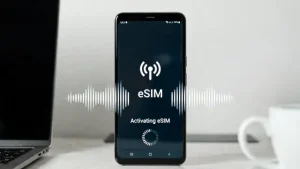
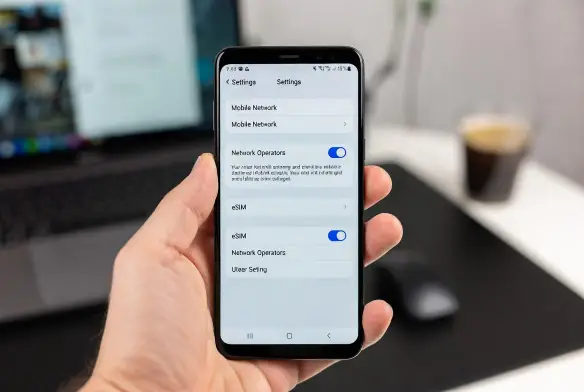
Instead of a physical SIM card, your phone stores the SIM information digitally. No tray. No swapping plastic cards. Just a quick setup inside your phone’s settings and you’re connected.
At first, I was skeptical about how practical eSIM in Nigeria would actually be. But after exploring how it works and testing it on a compatible device, the convenience started to make a lot more sense.
Still, there are a few important things Nigerians should understand before jumping in.
What Exactly Is eSIM?
Before diving deeper into eSIM in Nigeria, let’s quickly clarify what eSIM actually means.
eSIM stands for embedded SIM. Instead of inserting a physical SIM card into your phone, the SIM is already built into the device’s hardware.
Your network provider simply activates it digitally.
So instead of buying a SIM card, you scan a QR code or download a profile provided by the telecom operator.
Major smartphone brands like Apple, Samsung, and Google have already integrated eSIM support into many of their devices.
Apple explains the technology clearly on their official support page.
Once activated, the phone connects to the mobile network just like a traditional SIM would.
The Surprising Benefits of eSIM in Nigeria
When people first hear about eSIM in Nigeria, they often assume it’s just a small upgrade. But the reality is that it solves several everyday problems.
Easier Network Switching
One of the biggest benefits of eSIM in Nigeria is flexibility.
If your network signal becomes weak in a certain area, switching providers can be much easier. Instead of going to a store to buy another SIM card, you can simply install a new carrier profile.
For people who travel frequently between cities, this flexibility could become very useful.
Dual SIM Without Two Physical SIMs
Many smartphones now support dual SIM using eSIM.
For example, you can have:
- One physical SIM
- One eSIM
Or in some devices, two eSIM profiles.
This means you can keep a work number and personal number on the same phone without constantly swapping SIM cards.
It’s a small convenience, but once you start using it, it actually feels pretty modern.
Better Security
Here’s something people rarely mention when discussing eSIM in Nigeria.
eSIM can actually improve security.
If someone steals your phone, they cannot simply remove the SIM card to disconnect it from the network. Since the SIM is embedded inside the phone, it remains traceable.
That might not stop theft entirely, but it adds another layer of protection.
Telecom Networks Supporting eSIM in Nigeria
Right now, eSIM in Nigeria is gradually being adopted by major telecom providers.
Leading operators such as:
- MTN
- Airtel
have started offering eSIM activation for compatible devices.
Activation usually involves visiting a telecom service center where they generate a QR code that installs the eSIM profile on your phone.
Details about eSIM compatibility and activation are sometimes listed on network provider websites. For example:
https://www.mtn.ng
Availability may vary depending on location and device model.
Devices That Support eSIM
Not every smartphone supports eSIM in Nigeria yet.
Most compatible devices tend to be newer models such as:
- Apple iPhone XS and later models
- Google Pixel devices
- Samsung Galaxy S and Z series
Some tablets and smartwatches also support eSIM technology.
If you’re planning to switch, it’s always worth checking whether your device supports it first.
Are There Any Downsides to eSIM in Nigeria?
While eSIM in Nigeria has clear advantages, it’s not perfect yet.
For one thing, activation is still less convenient than it could be. In many cases, users still need to visit a telecom office for the initial setup.
Ideally, this process should eventually become fully online.
Another limitation is device compatibility. Many affordable smartphones still rely on traditional SIM cards, so widespread adoption may take time.
But technology adoption usually works like this — slow at first, then suddenly everywhere.
Should You Switch to eSIM in Nigeria?
So the big question: is eSIM in Nigeria worth switching to right now?
The honest answer depends on your device and how you use your phone.
If you have a compatible phone and like the idea of managing multiple networks digitally, then yes, it’s worth trying.
But if your phone doesn’t support it yet, there’s no urgent reason to rush.
Traditional SIM cards still work perfectly fine.
That said, the direction is clear.
More manufacturers are moving toward eSIM-only designs, and over time, physical SIM cards may slowly become less common.
Final Thoughts
The rise of eSIM in Nigeria represents a small but meaningful shift in how mobile connectivity works.
It removes the need for physical SIM cards, makes switching networks easier, and adds a layer of security that many users don’t think about.
Adoption may take some time, especially in markets where traditional SIM cards are deeply established.
But once more devices support it and activation becomes easier, eSIM could quietly become the new standard.
For now, it’s not a mandatory switch.
But it’s definitely a technology worth paying attention to.